


Custom Lapel Pins for Small Nonprofits: A 2026 Guide
Table of Contents
- Why Custom Lapel Pins Matter for Nonprofit Fundraising
- Custom Pins with Low Minimum Orders: Affordable Options for Small Organizations
- Donor Recognition Gift Ideas for Small Nonprofits
- Understanding the Cost of Custom Enamel Pins for Nonprofits
- How to Design a Custom Lapel Pin for Charity Events
- Material Types and Sustainability for Nonprofit Pins
- Getting Started: Your Custom Lapel Pin Ordering Process
- Frequently Asked Questions
Last Updated: September 1, 2026
Why Custom Lapel Pins Matter for Nonprofit Fundraising
Custom lapel pins are powerful tools for donor recognition, volunteer appreciation, and brand building that deliver meaningful impact at a fraction of corporate gift costs. A pin worn on a jacket becomes free advertising for your cause, every time a donor or volunteer wears it, they signal to their network that they care about your mission. The pin also serves as a physical anchor for the relationship, something tangible to hold onto when the emotional high of an event fades.
For fundraising events, custom pins create urgency and exclusivity. Limited-edition designs tied to specific campaigns make donors feel part of something special.
Custom Pins with Low Minimum Orders: Affordable Options for Small Organizations
The biggest barrier to custom pins for small nonprofits has been minimum order quantities. Many manufacturers required 500+ units, locking out organizations with modest budgets. That landscape has shifted. Low-minimum-order options now exist, starting at 50+ pins, making custom pins accessible to nonprofits of any size.
LapelPinPlanet also has stock pins with no minimum order. Hand-cast pewter pins start at $11 per unit with no prohibitive minimums. Whether you need 25 pins for a board meeting or 200 for a gala, you can order exactly what you need without warehousing excess inventory. Better yet, upgrade to a custom card and you can place a special message or logo on the presentation card that your pins arrive packaged on.
Low minimums provide operational flexibility. You can test a design at small scale before committing to larger runs, create annual editions without worrying about leftover stock, and respond to unexpected donor engagement spikes without scrambling for a new manufacturer.
Donor Recognition Gift Ideas for Small Nonprofits
Donor recognition doesn't require expensive trips or elaborate events. A tangible, wearable token of appreciation often resonates more deeply than impersonal recognition. Custom lapel pins fit this need perfectly because they're personal, portable, and visible.
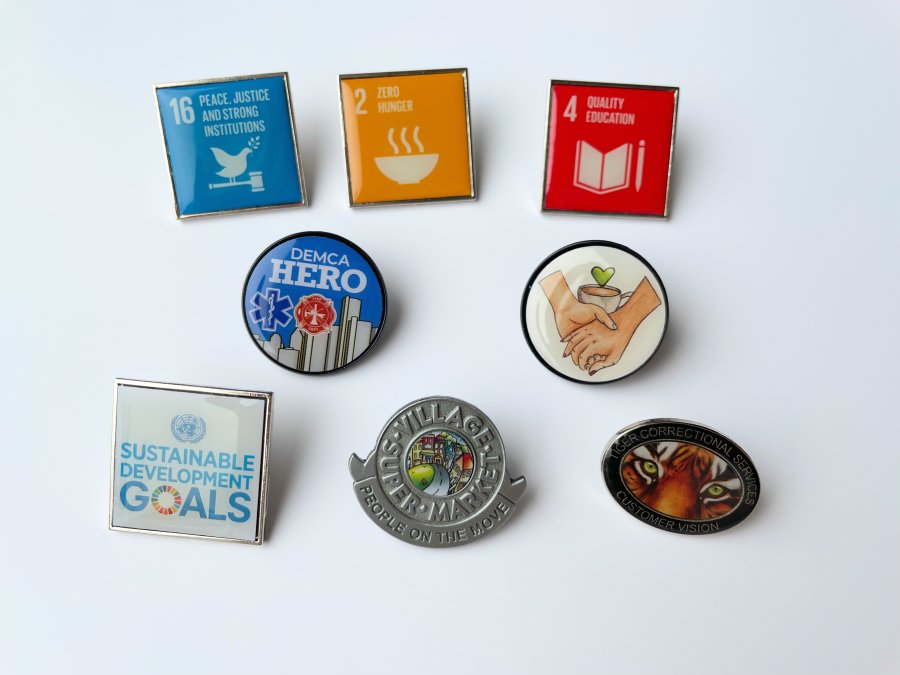
An array of custom photo dome lapel pins on a white background.
Consider tiering pin designs by donation level. A simple, elegant pin for $100 donors, a more elaborate three-dimensional design for $500+ donors, and a gold-dipped version for major donors. This creates a visual hierarchy that donors understand and appreciate.
Create an annual design that changes yearly. Donors who've supported you for five years end up with a collection of pins representing their history with your organization, building emotional attachment and making recognition feel cumulative.
Presentation matters as much as the pin itself. LapelPinPlanet includes customizable presentation cards with every order, transforming a pin from a trinket into a keepsake.
Understanding the Cost of Custom Enamel Pins for Nonprofits
Custom enamel pins typically range from $5 to $20 per unit depending on complexity, material, and order volume. For nonprofits, the cost-per-unit calculation should include pin lifespan. A $5 pin that deteriorates after six months is actually more expensive than a $12 pin that a donor wears for years.
LapelPinPlanet's hand-cast pewter pins start at $11 per unit, including solid lead-free pewter, hand-casting, and artist Jim Clift's signature on each pin. We offer quantity discounts starting at just 10 or more of each design, making this gift option quite affordable. For a nonprofit with a recognition budget, they can recognize supporters across multiple events or tiers.
Factor in presentation costs. Custom cards or packaging add $50 for the first 100 cards, and $15 for each additional hundred, but dramatically increase perceived value. A pin handed over with a story and custom card feels like a $30 gift; the same pin in a plastic bag feels like a $5 trinket.
Don't let volume discounts push you into ordering more than needed. Order what you'll actually use.
How to Design a Custom Lapel Pin for Charity Events
Designing a custom lapel pin requires thinking about symbolism, legibility, and durability. A design that looks great on screen might not translate at 1-inch scale.
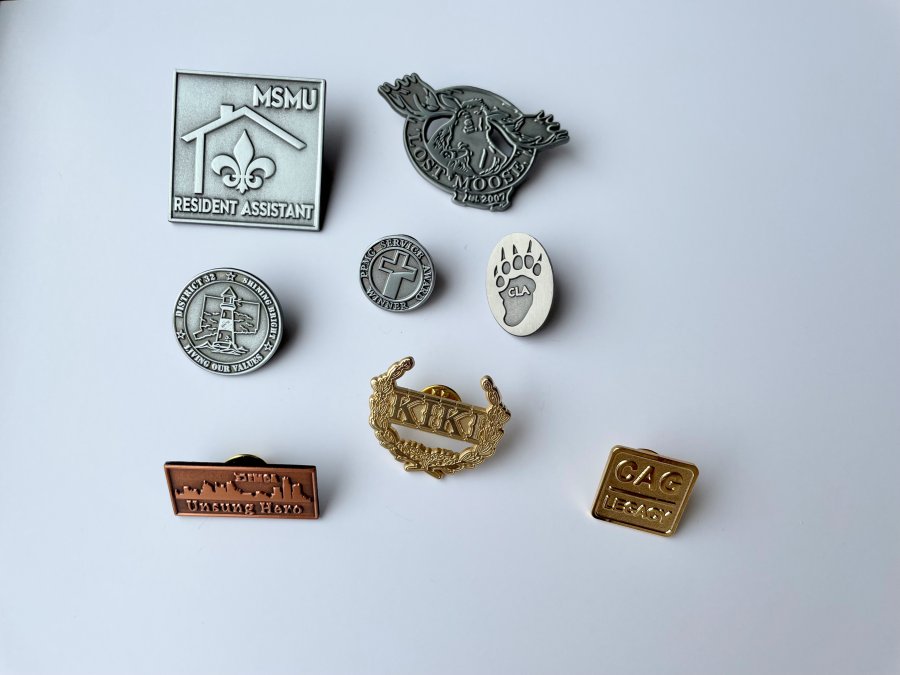
Collection of die-struck lapel pins on a white background.
Start with your core symbol or message. What single image best represents your organization or campaign? A puzzle piece works for collaboration. A heart works for compassion. A key works for access. Keep it simple enough that someone recognizes it from across a room.

Consider scale and detail. Custom pins are typically 0.75 to 1.25 inches. At that scale, intricate details get lost. Design assuming 80% of viewers will see this pin from 3+ feet away.
LapelPinPlanet's design team works with vector files (AI, EPS, or SVG), not JPEGs or PDFs. Vector files are scalable without losing quality.
Include your organization's name or acronym, but make it secondary to the main symbol. Avoid trendy design elements that will feel dated in two years. Your pin is a keepsake, design for timelessness.
When ready to order, expect the manufacturer to request artwork adjustments. This is valuable feedback that improves manufacturability.
Material Types and Sustainability for Nonprofit Pins
The material you choose affects durability, aesthetics, cost, and environmental impact. For sustainability-conscious nonprofits, this choice matters both practically and symbolically.
Soft enamel uses stamped metal bases with colored enamel fills. It's affordable and textured, but wears over time with potential chipping and tarnishing. Hard enamel uses a smoother, more durable finish baked at higher temperatures, creating a harder surface that resists chipping. Acrylic pins are lightweight and affordable but fragile and fade in UV exposure.
Cast metal, particularly hand-cast pewter, offers exceptional durability and aesthetic depth. Pewter is soft enough to cast in fine detail but hard enough to resist wear. Lead-free pewter is safe for long-term skin contact. The cost is higher, but the lifespan is measured in decades.
For sustainability, cast metal from recycled sources is the strongest choice. LapelPinPlanet uses recycled materials and sustainable energy in production. Acrylic and PVC are petroleum-based plastics that end up in landfills.
Quality also has environmental dimensions. A pin lasting 20 years has lower total environmental impact than five cheap pins lasting 4 years each.
Getting Started: Your Custom Lapel Pin Ordering Process
Ordering custom lapel pins is straightforward if you know what to expect.
Step 1: Define Your Concept Decide what symbol or message your pin will carry. Sketch it or describe it clearly. Think about size, color, and whether you want your organization's name included.
Step 2: Prepare Your Artwork Work with a designer to create a vector file (AI, EPS, or SVG format). Provide a clear brief: "We need a vector logo suitable for a 1-inch cast metal pin, recognizable from 3+ feet away." Budget $200-500 for professional design work.
Step 3: Choose Your Material and Specifications Decide between soft enamel, hard enamel, or cast metal. For nonprofits prioritizing durability and quality, hand-cast pewter is worth the investment. Specify size, finish, and attachment type.
Step 4: Request a Quote and Sample Contact your chosen manufacturer with artwork and specifications. Ask for a sample or mockup showing how your design will look in actual material. This catches design issues before production.
Step 5: Approve and Order Once satisfied with the mockup, approve the design and place your order. Specify quantity, timeline, and customization options like custom presentation cards.
Step 6: Receive and Distribute Pins typically arrive within 4 weeks. Inspect for quality and distribute at events, with thank-you notes, or at recognition ceremonies.
Plan accordingly for timelines. If your gala is in 8 weeks, order pins now, not 2 weeks before. Factor shipping costs into your budget.
Custom lapel pins for small nonprofits represent a rare intersection of affordability, impact, and sustainability. They solve the recognition challenge every nonprofit faces: how to meaningfully thank supporters on a limited budget. The key is choosing quality over quantity, designing with intention, and treating the pin as part of a larger recognition strategy.
LapelPinPlanet makes this accessible. Hand-cast pewter pins start at $11 per unit with no minimum order requirements, custom card options, and sustainable manufacturing practices. Whether recognizing 25 board members or 200 event attendees, you can create a pin reflecting your mission and lasting as a genuine keepsake. Get started by defining your design concept and requesting a quote.
Frequently Asked Questions
Can I order custom lapel pins with low minimum quantities for my small nonprofit?
Yes. Many providers, including LapelPinPlanet, offer custom lapel pins without steep minimum order requirements, making them accessible for small nonprofits with limited budgets. Hand-cast pewter pins typically start at $11 per pin, allowing you to order quantities that match your fundraising needs, whether that's 50 pins for a local event or 200 for a larger campaign. This flexibility means you're not forced to buy inventory you can't distribute.
How do custom lapel pins help with donor recognition?
Custom pins serve as tangible tokens of appreciation that donors wear proudly, extending your organization's visibility beyond the initial gift. They create a sense of belonging and community among supporters. Personalized designs featuring your nonprofit's logo or mission reinforce brand identity and remind wearers of their contribution. Many nonprofits use tiered pin designs to recognize different donor levels, turning recognition into a meaningful keepsake that builds long-term donor retention and loyalty.
What is the typical cost of custom enamel pins for nonprofits?
Pricing depends on the quantity you are ordering, the material you choose, and the size of your design. For bulk orders, many suppliers offer volume discounts that reduce per-unit cost. Budget-conscious nonprofits can start small with 50-100 pins at around $550-$1,200. Custom artwork preparation is often included, eliminating hidden design fees.
How do I prepare artwork for a custom nonprofit lapel pin?
Most pin manufacturers accept vector artwork (Adobe Illustrator or EPS files) or high-resolution raster images at 300 DPI. Simplify your nonprofit logo or design to ensure it translates clearly at small scale (typically 0.5 to 1 inch). Avoid thin lines and ensure sufficient contrast between colors. Many providers, like LapelPinPlanet, offer design consultation and revision rounds before production. Submit your artwork in the format requested by your manufacturer, and expect 1-2 weeks for design approval before production begins.
What materials are best for sustainable nonprofit pins?
Lead-free solid pewter is an environmentally responsible choice that avoids toxic metals and lasts for decades. Many manufacturers now use recycled materials and sustainable energy in production. Pewter's durability means pins won't degrade or tarnish quickly, reducing waste. If sustainability is a priority, verify that your pin supplier uses certified recycled materials and renewable energy sources. Hand-cast pewter pins signed by artisans often represent a commitment to quality craftsmanship that extends product lifespan, making them a better long-term environmental choice than cheaper alternatives.
This article was written using GrandRanker