


High Quality Pewter Lapel Pins: 2026 Buyer's Guide
Table of Contents
- What Makes High Quality Pewter Lapel Pins Stand Apart
- Why Lead-Free Pewter Pins Are the Safer, Smarter Choice
- Durable Lapel Pin Materials: What Actually Holds Up Over Time
- Featured High Quality Pewter Lapel Pins from LapelPinPlanet
- Custom Pewter Lapel Pins for Corporate and Nonprofit Use
- How to Care for Your Pewter Lapel Pins
- The History and Artistry Behind Pewter Casting
- Which Pewter Lapel Pin Is Right for You?
Last Updated: August 28, 2026
What Makes High Quality Pewter Lapel Pins Stand Apart
High quality pewter lapel pins are defined by three things: the metal itself, the casting method, and the hands that shaped them. At LapelPinPlanet, every pin starts as an original sculpture by artist Jim Clift, hand-cast in solid, lead-free fine pewter with contour detail that mass-produced alternatives cannot replicate.
Most lapel pins are stamped or die-cast from zinc alloys, then plated with a thin finish that wears off within months. A genuine hand-cast pewter pin carries its character in the metal itself. The surface develops a natural patina over time rather than flaking or corroding, which is why collectors and organizations choose pewter for keepsakes and awards meant to last. The 3D relief on a well-cast pewter pin distinguishes it from flat enamel pins, with depth, shadow, and texture that catch light differently depending on angle.
Handcrafted vs. Die-Cast: A Real Difference
Die-cast pins are produced by injecting molten metal into a rigid steel mold under high pressure, flattening fine detail and producing a uniform, plastic-looking surface. Handcrafted spin-cast pins start from a hand-sculpted original, preserving the artist's tool marks, subtle undercutting, and curved surfaces. What you receive is a pin that carries the fingerprint of its maker, not a factory floor.
A common mistake is assuming "pewter-colored" means pewter. Many pins are zinc alloy with gray plating. Genuine lead-free pewter is a tin-based alloy, softer and denser than zinc, with a warmth to its finish that no plating can fake.
The Spin-Cast Manufacturing Process Explained
Spin casting produces high-fidelity metal reproductions from a hand-sculpted original. The original sculpture is embedded in a vulcanized rubber mold, then spun at high speed while molten pewter is fed into the center. Centrifugal force drives the metal into every cavity, capturing detail that pressure die-casting misses. Each casting is inspected individually before finishing, eliminating the defect rate that plagues high-volume die-cast production.
Why Lead-Free Pewter Pins Are the Safer, Smarter Choice
Lead-free pewter pins are the standard for any pin intended for regular wear, gifting, or use around children. Traditional pewter historically contained lead, but modern formulations replace it with antimony and bismuth, producing an alloy that is safe to handle, durable, and fully compliant with contemporary safety expectations.
According to the Consumer Product Safety Commission's guidelines on lead in children's products, lead content in items accessible to children is strictly regulated. Choosing certified lead-free pewter eliminates that concern entirely. Every LapelPinPlanet pin is cast in solid, lead-free fine pewter, a material specification that affects safety, longevity, and finish quality.
Pewter vs. Other Metals: How It Compares
Metal |
Durability |
Detail Fidelity |
Finish Over Time |
Typical Use |
|---|---|---|---|---|
Lead-free pewter |
High |
Excellent (spin-cast) |
Develops warm patina |
Artisan pins, keepsakes, awards |
Zinc alloy (die-cast) |
Moderate |
Good |
Plating wears and chips |
Budget promotional pins |
Brass |
High |
Good |
Tarnishes, requires polishing |
Military insignia, traditional badges |
Sterling silver |
Very high |
Excellent |
Tarnishes, high maintenance |
Jewelry, high-end gifts |
Enamel-filled zinc |
Moderate |
Moderate |
Enamel can crack |
Colorful promotional pins |
Pewter occupies a practical middle ground: it delivers jewelry-grade detail at a fraction of the cost of precious metals, with far better longevity than plated zinc alloys. The natural patina that develops on pewter is considered a feature by collectors, while brass and silver require active maintenance to prevent tarnish.
Durable Lapel Pin Materials: What Actually Holds Up Over Time
Durability in a lapel pin depends on whether the finish is integral to the metal or applied on top of it. Plated pins fail at the plating layer; once that thin electroplated surface chips or wears through, the pin cannot be restored without professional replating. Solid pewter has no plating layer to lose. The surface you see at purchase is the same material throughout, and surface marks can be buffed out with a soft cloth.

For durable lapel pin materials, solid cast metals will always outperform plated alternatives over a multi-year horizon, especially for corporate awards and recognition pins meant to be worn repeatedly and kept as long-term keepsakes.
Finish, Patina, and Long-Term Aesthetic Appeal
Pewter develops a patina rather than tarnishing like silver or brass. Patina is a subtle deepening of the metal's natural gray tone, concentrating in recessed areas and enhancing the 3D relief rather than obscuring it. This aging process actually improves the visual contrast on a sculpted pin, with high points remaining bright while recesses darken, creating an effect that makes detail read more clearly over time.
Enamel fill can be added to pewter pins to introduce color without sacrificing sculptural quality, with the enamel sitting in recessed areas defined by the metal contour so the pewter's raised lines remain intact. veteran gift ideas.
Featured High Quality Pewter Lapel Pins from LapelPinPlanet
The LapelPinPlanet catalog is built around original sculptures by Jim Clift, each hand-cast in solid, lead-free pewter and priced at $11.00. Every pin ships on a signature presentation card, ready for gift-giving. What makes this catalog different from most promotional pin suppliers is the depth of sculpting, these are not flat graphics with a raised border, but miniature sculptures with undercuts, surface texture, and dimensional detail that only spin casting can produce.
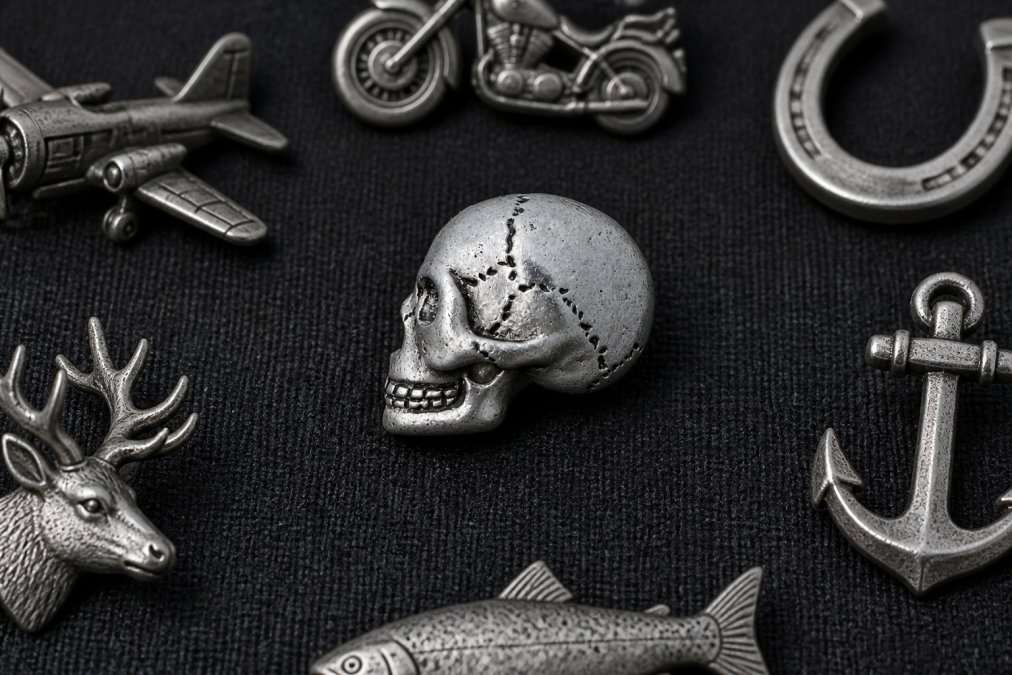
Skull Lapel Pin, Bold Detail for Collectors and Medical Pros
The Skull Lapel Pin measures 16mm x 15mm and delivers exceptional skeletal detail at a scale that should not be possible for an $11.00 pin. The orbital structure, nasal cavity, and dental arch are all present and readable, making it valuable for medical staff, collectors, and fashion wearers.
Canadian Goose Lapel Pin, Nature-Inspired 3D Relief Sculpting
At 35mm x 26mm, the Canadian Goose Lapel Pin demonstrates what spin casting can do with organic form. The wing feathering, neck curvature, and bill detail are all rendered in three dimensions, making it ideal for nature organizations, wildlife nonprofits, and birdwatching clubs.

Teddy Bear, Teapot, and Teacup Pins, Everyday Gifts with Artisan Character
The Teddy Bear Lapel Pin at 13mm x 18mm, the Teapot Lapel Pin at 27mm x 18mm, and the Teacup Lapel Pin at 18mm x 12mm represent gift-ready designs. The teapot and teacup pair particularly well for tea enthusiasts and baristas, all arriving individually packaged on presentation cards.

Rocket, Coffee, and Pump Pins, Personality Pins for Every Passion
The Rocket Lapel Pin at 11mm x 27mm works for science educators and STEM program participants. The Bag of Coffee Lapel Pin at 16mm x 20mm and the Coffee Bean Lapel Pin at 7mm x 10mm are purpose-built for coffee shop staff recognition. The Pump Lapel Pin at 24mm x 13mm is a high-heel silhouette with pointy-toe detail. All share the same $11.00 price point and military-style clutch backing.
Custom Pewter Lapel Pins for Corporate and Nonprofit Use
Corporate and nonprofit buyers approach pewter lapel pins differently than individual collectors. Sculptural three-dimensional pewter pins are not too artistic for professional settings; many organizations find that a well-crafted artisan pin carries more perceived value than a flat enamel badge. Employee recognition programs, membership insignia, fundraising keepsakes, and conference gifts all benefit from a pin that recipients actually want to keep.
According to the Promotional Products Association International's research on branded merchandise, recipients of quality promotional products report significantly higher brand recall than those receiving standard printed materials. For small nonprofits concerned about minimum order quantities and budget constraints, lapelpinplanet offers quantity pricing, so the larger the quantity you are buying for your event, the lower cost per gift. This pin price point makes even modest runs financially accessible. Custom card options allow organizations to include their logo or event name on the presentation card without changing the pin itself.
Pin Attachment Types: Clutch Backing, Tie Tack, and More
The backing on a lapel pin determines how it attaches to fabric and how secure it stays during wear. Clutch backing (also called a butterfly clutch) is the most common attachment type, using a flat post that locks into a spring-loaded metal clutch. It is fast to attach, holds firmly on most fabrics, and is the standard for most lapel pins. All LapelPinPlanet pins use a US-made military-style clutch backing with a tighter grip than standard commercial clutches.
Tie tack attachments use a short post with a separate clutch and a small chain or bar that anchors to the tie fabric, traditional for formal wear where pin security is critical. For most corporate and organizational use cases, the military-style clutch backing is the right choice.
How to Care for Your Pewter Lapel Pins
Pewter lapel pins are among the lowest-maintenance metal accessories available. The absence of a plating layer means there is no coating to protect, crack, or strip away.
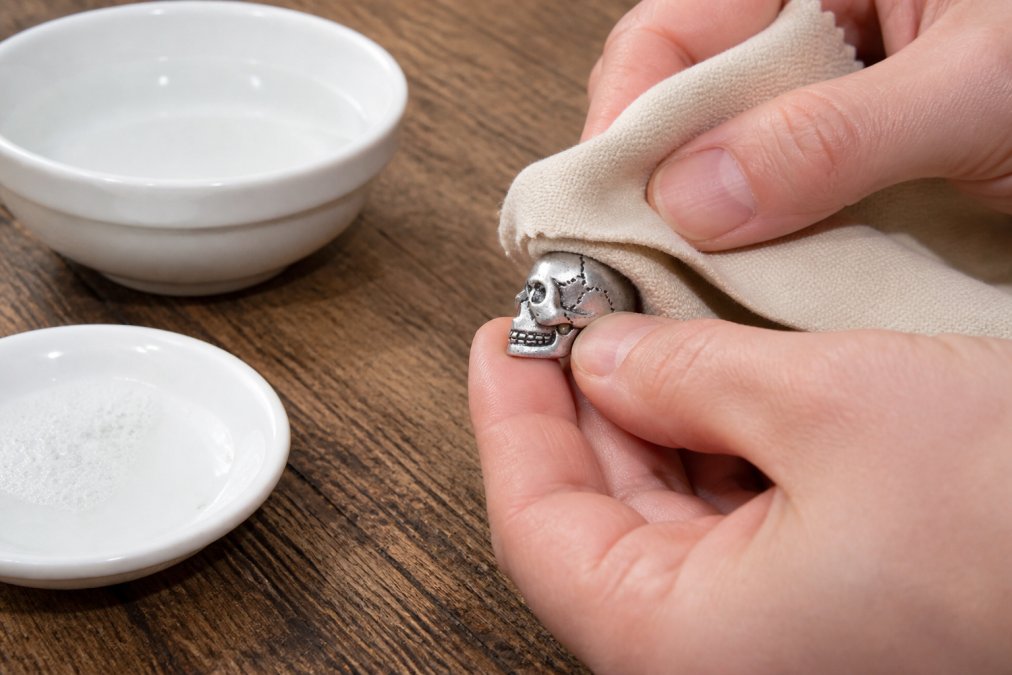
The basic cleaning method involves warm water, a small amount of mild dish soap, and a soft cloth. Rub the pin gently in circular motions, paying attention to recessed areas. Rinse thoroughly and dry immediately. For deeper cleaning, a paste of flour, salt, and white vinegar applied with a soft toothbrush works well on pewter. As documented in the Smithsonian Institution's metal care guidelines, gentle mechanical cleaning with soft materials is preferred over chemical polishes for alloy metals.
What to avoid: ultrasonic cleaners, abrasive polishing compounds, silver polish, and prolonged storage in airtight plastic bags. Store pewter pins in a dry environment, ideally on a display card or in a lined pin box, and avoid contact with rubber, which can cause sulfur-based discoloration on tin-based alloys.
The History and Artistry Behind Pewter Casting
Pewter casting has been practiced for more than two thousand years. Archaeological finds from Roman Britain include pewter vessels and decorative objects cast using methods recognizably similar to modern spin casting. The metal's low melting point made it accessible to craftspeople without access to high-temperature furnaces required for bronze or iron work.
The artistry of pewter casting reached a peak in medieval and Renaissance Europe, where guild-regulated pewterers produced everything from church vessels to domestic tableware. According to the Pewter Society's historical overview of the craft, the tin-based alloy remained the dominant material for household goods in England until the widespread adoption of pottery and glass in the 18th century.
Jim Clift's work at LapelPinPlanet sits directly in that tradition: each design begins as an original hand-sculpted piece, and the spin-cast production process preserves the sculptural quality across every pin in the run. The design is not a graphic vectorized and sent to a factory, but a three-dimensional sculpture reproduced with a fidelity that only vulcanized rubber mold casting can achieve.
Which Pewter Lapel Pin Is Right for You?
The right pin depends on who it is for and what it needs to communicate.
Use Case |
Recommended Pin |
Why |
|---|---|---|
Medical professional gift |
Anatomy detail, cultural resonance |
|
Nature organization or wildlife nonprofit |
Strong 3D relief, recognizable subject |
|
Coffee shop staff recognition |
Bag of Coffee or Coffee Bean Pin |
Category-specific, gift-ready packaging |
Science educator or STEM program |
Rocket Lapel Pin |
Clean design, broad appeal |
Sentimental personal gift |
Warm, universally understood symbolism |
|
Tea enthusiast or barista |
Teapot and Teacup Pin set |
Pairs well, presentation-card ready |
Fashion-forward personal wear |
Pump Lapel Pin |
Distinctive silhouette, wearable daily |
Most LapelPinPlanet pins work across multiple contexts because the sculpting quality elevates them above novelty. The $11.00 price point means the cost of getting two options to try is still less than most single-piece jewelry purchases. For bulk corporate or nonprofit orders, the custom card option adds organizational context to any design without requiring a fully bespoke pin.
Choosing the right lapel pin should not require settling for mass-produced alternatives that lose their finish within a season. LapelPinPlanet offers hand-cast, lead-free pewter lapel pins signed by artist Jim Clift, produced through a family-crafted process using recycled materials and sustainable energy. Every pin arrives presentation-ready at $11.00, with custom card options available for organizational orders. Submit your inquiry to find the right design for your collection, your team, or your next event.
Frequently Asked Questions
Q: What makes pewter a high-quality material for lapel pins?
A: Solid pewter is a tin-based alloy prized for its weight, detail retention, and durability. Unlike zinc or plastic, it holds fine 3D relief contours without cracking or flaking. Lead-free pewter is also safe against skin contact, making it jewelry grade. The material develops a natural patina over time that adds character rather than looking worn, which is why collectors and corporate buyers both favor it over cheaper alternatives.
Q: Are lead-free pewter lapel pins safe to wear every day?
A: Yes. Lead-free pewter contains no lead, making it safe for regular skin contact. Traditional pewter historically contained lead, but modern formulations use tin, antimony, and copper instead. LapelPinPlanet's pins are hand-cast from solid, lead-free fine pewter and made in the US, so they meet current safety expectations for wearable accessories.
Q: How do you tell a handcrafted pin apart from a mass-produced one?
A: Handcrafted pewter lapel pins show crisp, deep contour detail that flat die-cast pins cannot replicate. Look for genuine 3D relief sculpting, slight natural variation between pieces, and a solid weight that feels substantial in hand. LapelPinPlanet pins are individually hand-cast and signed by artist Jim Clift, so each piece carries the marks of artisan production rather than the uniform, lightweight feel of mass-produced alternatives.
Q: How should I clean and care for pewter lapel pins?
A: Wipe pewter pins with a soft, dry cloth after each wear to remove oils and dust. For deeper cleaning, use mild soap and warm water, then dry thoroughly — never leave pewter wet. Avoid abrasive cleaners or silver polish, which can strip the natural patina. Store pins in a dry environment away from humidity. With basic care, a solid pewter pin will hold its finish and detail for decades.
Q: What are my options for custom pewter lapel pins if I have a small order?
A: LapelPinPlanet accommodates organizations of all sizes, including nonprofits and small businesses that need modest quantities. The custom card option lets you present any existing pin design with your logo, event name, or special message printed on the backing card, making even small orders feel bespoke. For fully custom sculptural designs, contacting the team directly is the best starting point to discuss design specifications, quantities, and timelines.
This article was written using GrandRanker