


Why Choose Pewter for Lapel Pins: A 2026 Guide
Table of Contents
- What Makes Pewter Lapel Pins Stand Out
- Pewter vs Enamel Pins: Which Is Right for You?
- The Benefits of Lead-Free Pewter for Everyday Wear
- Durability and Longevity: How Pewter Pins Last
- Design Capabilities: 3D Sculpting and Intricate Detail
- High Quality Pewter Lapel Pins: What to Look For
- Cost, Sustainability, and Bulk Order Considerations
- Frequently Asked Questions
Last Updated: September 12, 2026
What Makes Pewter Lapel Pins Stand Out
Why choose pewter for lapel pins? Because they are cast in a soft, workable metal that captures sculptural detail other materials flatten out, and they hold that detail for decades. This guide from LapelPinPlanet explains why you should choose pewter for lapel pins when you want a small sculpture rather than a flat badge.
The short answer: pewter takes a three-dimensional shape better than most pin metals, ages with a warm patina instead of flaking, and modern lead-free alloys make it safe for everyday wear against skin. Most pin materials force a trade-off between fine detail and a finish that survives daily use.
Pewter is a metal alloy traditionally made from tin with small amounts of copper and antimony, valued for its low melting point and its ability to hold fine surface detail when cast. That low melting point lets a maker pour metal into a detailed mold without warping fine edges, which is exactly what intricate designs need.
The reason a pewter pin looks hand-sculpted is that it often is. A sculptor carves the original in wax or clay, a mold is made from that original, and each pin is cast from the mold. The detail you see is the detail that was carved, not a design flattened onto a stamped blank.
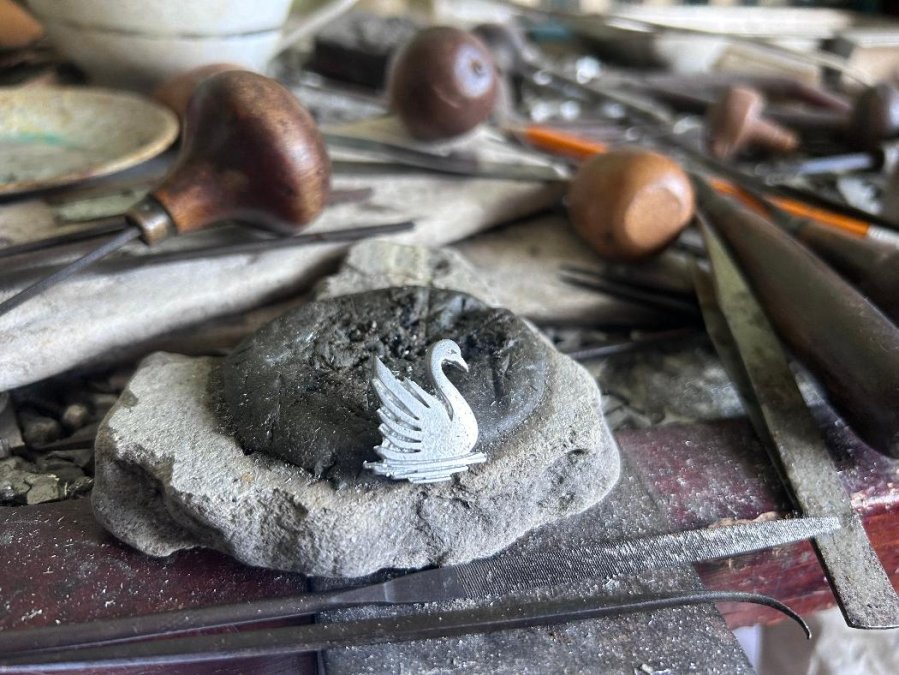
Close-up of a model in process, a small, detailed pewter swan lapel pin, soft natural light highlighting the metal's textured surface
Pewter vs Enamel Pins: Which Is Right for You?
Pewter wins for dimensional, sculptural designs; enamel wins for flat color graphics and logo replication. Understanding how each pin is built keeps you from ordering the wrong material.
Enamel pins start as a stamped or die-struck metal base. The maker cuts recessed cells into that base, fills them with colored resin or glass, and cures the color in place. The metal is a thin outline; the color is a separate material inside it. That process is fast, repeatable, and excellent at holding a clean two- or three-color logo with sharp edges.
Pewter pins are cast, not stamped. Molten metal flows into a mold carved from an original sculpture, so the surface itself carries the relief. There are no color cells, no separate fill material, and no flat blank underneath.
Feature |
Pewter Pins |
Enamel Pins |
|---|---|---|
How it's made |
Cast from a sculpted mold |
Stamped base with color-filled cells |
Best for |
3D sculpture, fine relief, single-tone art |
Flat logos, multi-color graphics |
Surface feel |
Textured, warm metal with visible relief |
Smooth, glossy color with metal outlines |
Color range |
Single metal tone plus patina |
Wide, multi-color fills |
Detail type |
Raised and recessed relief with real depth |
Color-filled outlines, mostly flat |
Wear over time |
Darkens into patina, contrast deepens |
Color can chip or lift at cell edges |
Weight in hand |
Noticeably heavier for its size |
Lighter, thinner profile |
Best quantity fit |
Small-to-mid runs where detail matters |
Large runs where unit cost dominates |
The trade-off is real. If your design is a two-color corporate logo with clean lines and you need thousands of units, enamel is simpler and cheaper. If your design is a rhinoceros, an antelope, or a shopping bag with visible folds and shadow, pewter carries that depth in a way enamel cannot, because there is no flat cell for the shading to fall into.

Shopping Bag Lapel Pin
A common mistake is choosing enamel for artwork drawn with shading and depth; enamel flattens it into color blocks. The reverse mistake is choosing pewter for a design that only works in bright multi-color. Pick the material that matches the artwork.
Pick up a pewter pin and an enamel pin of similar size side by side. The pewter one has a heft and coolness that reads as solid metal, while the enamel pin feels lighter and more like a coated badge. For collector pins, award pins, and donor recognition pieces, that weight difference often decides the purchase, it signals value before anyone reads the design.
The Benefits of Lead-Free Pewter for Everyday Wear
Lead-free pewter is the modern standard and the version to insist on for anything worn against skin. Older pewter sometimes contained lead, which is why some buyers hesitate. Today's fine pewter alloys replace lead with other metals, and reputable makers label their alloy clearly.
The benefits of lead-free pewter go beyond safety:
- Skin contact is fine. No lead means no concern about prolonged wear against a collar or hat.
- It resists tarnish better. A quality alloy holds its finish with basic care.
- It still casts beautifully. Removing lead does not cost you detail.
- It is a better gift. You can hand it to anyone without a caveat.
If you have a metal sensitivity, ask the maker what the base metal and any plating actually are. Pewter is generally well tolerated, but a plated finish is a separate layer worth confirming before buying in bulk.
Durability and Longevity: How Pewter Pins Last
Pewter pins last for decades with basic care because the metal is solid throughout, not a thin coating over a cheaper core. A plated pin can wear through its finish and reveal a dull base metal underneath. A solid pewter pin is the same metal all the way down, so there is no layer to fail.
What happens to a pewter pin over time is patina, not decay. The surface darkens in the recessed areas as the metal reacts with air and handling, deepening the contrast between raised and recessed detail. Collectors often prefer an aged pewter pin to a freshly polished one: it does not lose detail, it gains definition.
Compare that to the common failure modes on other pin types:
- Plated pins can flake or wear through at high-contact points like the edges and the pin post, exposing a different-colored base metal.
- Enamel pins can chip or lift color at the cell edges, especially where the pin flexes or rubs against fabric.
- Stamped pins can bend or lose crisp edges because the metal is thin.
- Solid cast pewter has none of those layers or thin sections to fail. It can dent if struck hard, but it does not peel, chip, or delaminate.
Care is simple. Wipe the surface with a soft cloth after handling, and keep it away from harsh chemicals, household cleaners, and prolonged moisture. A light polish restores original brightness without harming the relief, just avoid abrasive compounds that could round off fine edges.
Pewter's softness is a feature, not a flaw. Soft metal takes a crisp impression from a mold, which is why the detail is so sharp in the first place. Treat the pin like a small sculpture rather than a keychain, and it will outlast the jacket you pin it to.
For daily wear, confirm two things before buying in bulk: that the alloy is lead-free, and that any plating or finish is nickel-free. Nickel is one of the most common contact allergens in jewelry and hardware, and it shows up in cheap platings far more often than in solid pewter. If you or your recipients have sensitive skin, ask the maker directly what the base metal and any coating actually are.
Design Capabilities: 3D Sculpting and Intricate Detail
Three-dimensional sculpting is where pewter leaves every flat pin process behind. Because the metal flows into fine mold cavities at a low melting point, a maker can cast undercuts, raised relief, and layered depth that stamping and enamel cannot produce.
That capability changes what a pin can be. A wildlife pin can show the texture of hide and the curve of a horn. A hat pin can render a folded paper bag with real shadow. This is the difference between a metal badge and wearable art.
For custom work, the process usually runs through these stages:
- Concept and sketch. You share the idea and any reference art.
- Sculpting the original. An artist carves the design in three dimensions.
- Custom molding. A mold is made from the finished sculpture.
- Casting. Molten pewter is poured and each piece is finished by hand.
- Finishing and inspection. Edges are cleaned, the surface is checked, and the pin is signed.
Hand-cast pins are not identical the way injection-molded plastic is. Small variations between pieces are normal and are part of what makes each one a keepsake.
High Quality Pewter Lapel Pins: What to Look For
High quality pewter lapel pins share checkable traits: a clearly stated lead-free alloy, solid construction rather than a plated shell, crisp relief with no soft or blurred edges, and a secure pin back. You can verify most of this before you buy.
Work through this checklist:
- The alloy is described as lead-free fine pewter, not just "metal."
- The pin is solid cast, not a stamped blank with plating.
- Relief edges are sharp, with no filled-in or mushy detail.
- The pin back is a friction clutch or butterfly clutch that grips firmly.
- The maker signs or identifies the piece if it is sold as collectible.
- Care instructions are provided.
A signed pin matters for collectors. At LapelPinPlanet, every piece is an original three-dimensional sculpture hand cast in solid, lead-free fine pewter and signed by artist Jim Clift, which gives each pin a traceable origin rather than an anonymous factory stamp.
Cost, Sustainability, and Bulk Order Considerations
Bulk pricing, recycled material, and solid construction decide whether a custom order is worth it. Volume lowers the per-piece cost, but only if the pins hold up, so weigh total cost of ownership, not just unit price.
On sustainability, ask the maker how the metal is sourced and how the studio is powered. Pewter's low melting point takes less energy to cast than higher-temperature metals, and recycled pewter stock is widely used. At LapelPinPlanet, the studio casts in recycled materials and runs on sustainable energy, and the family-crafted process keeps production small and accountable.
For nonprofits and small organizations, the practical question is minimum order size. Ask for the quote at your real number first.
This is where the weight and feel argument lands. Pewter has a satisfying heft for its size, heavier than a thin stamped pin and warmer in the hand than steel. For a donor recognition pin or milestone award, that weight signals value in a way a lightweight badge does not.
Want to see the detail for yourself? Browse the Shopping Bag Lapel Pin at $11.00, or look at the Rhinoceros Lapel Pin and Elephant Lapel Pin, each $11.00, to judge the relief quality before you order custom work.


Choosing the right pin material comes down to one question: do you want a flat badge or a small piece of wearable art? If your design has depth, texture, or meaning worth sculpting, pewter carries it in a way other materials cannot. LapelPinPlanet hand casts every three-dimensional pin in solid, lead-free fine pewter, signs each one by artist Jim Clift, and produces them with recycled materials and sustainable energy. Submit your design and see the detail for yourself.
Frequently Asked Questions
What is a pewter lapel pin?
A pewter lapel pin is a decorative accessory cast from a metal alloy that is primarily tin, often mixed with small amounts of copper or antimony. Unlike mass-produced zinc alloy pins, pewter lapel pins are frequently hand-cast, allowing for deeper 3D detail and a distinctive weighty feel. Lead-free pewter is safe for everyday wear and develops a subtle patina over time, making each pin a unique keepsake.
Is pewter durable enough for custom pins?
Yes, pewter is surprisingly durable for custom pins. While it is a softer metal than steel or brass, its density allows it to hold intricate shapes without bending easily under normal wear. High-quality pewter pins resist corrosion and maintain their finish for years. The key is choosing solid, lead-free pewter rather than plated or hollow alternatives, which can wear down quickly.
How does pewter compare to enamel pins for custom designs?
Pewter and enamel pins serve different purposes. Enamel pins offer vibrant, flat colors and are great for bold logos. Pewter pins excel at three-dimensional sculpting and fine texture, making them ideal for artistic, handcrafted designs. Pewter also offers a more premium, tactile feel. For corporate gifts or collector items, pewter often feels more substantial and timeless than enamel.
Are lead-free pewter pins safe for everyday wear?
Absolutely. Lead-free pewter is specifically formulated to meet modern safety standards, making it safe for prolonged skin contact. Unlike older pewter that contained lead, today's fine pewter is non-toxic and hypoallergenic for most people. This makes lead-free pewter pins a smart choice for children's gifts, everyday accessories, and corporate swag worn against the skin.